Women in Tech + Fertility Resources | Design + Web3 Books | Erin Jerri
Technology
International Women's Month: Women in Tech Resources | What I Wish I Knew About Fertility - Resources (AthenaDAO and Bioprinting the Future of Reproductive Health) | Design + Web3 ⛓️ Books
Author
Erin Jerri Pangilinan
Date Published
Reading Time
12 min read
Happy International Women’s Month/Women’s History Month! 🎉
In my next issue, I promise I will talk about DeepSeek and AI Opportunity and all the other philosophies surrounding it (doomerism etc.). This issue will be dedicated towards women and women in tech.
For this this issue and those moving forward, format wise, I like to touch on different areas of tech, the trinity/threes of each: a little bit of
Ξrin’s Jerri’s Newsletter is a reader-supported publication. To receive new posts and support my work, consider becoming a free or paid subscriber.
Subscribe
XR ᯅ
AI 🤖
web3 ⛓️
in these three disciplines:
Software Engineering, 👩🏻💻
Design, and 🎨
Business 👩🏻💼
on these topics:
Productivity (how to manage one’s self) 📊
Self-Development (how to develop one’s self) and 🧘🏻♀️
The market (how one can view the environment around them. 📈
The topics of productivity, self-development, and the market, makes me think of one of my favorite quotes that Shannon Lee writes in the book Be Water, My Friend: The Teachings of Bruce Lee, about her father Bruce Lee. To me it is all about agency and action as a form of self-determination.
“We create our reality by how we choose to act and how we choose to respond to things outside ourselves from within ourselves.”
In this issue I write about:
Design, Science, and Engineering - Women’s Focused - Fertility Resources, AthenaDAO and Decentralized Science (DeSci) 👩🏻🔬 and 3D Printing in Biology to Advance Fertility and Women’s Health Research, Women in Tech Resources
Engineering / Tech - Women in Tech Resources (mainly for Software Engineers). Also check out this great AI generated Official Lyric video for Nicki Minaj’s “Red Ruby da Sleeze” using prompt engineering below.
Business - Web3 and Design Books - The Humanity and Soul of Tech Source: Substack What is Decentralization? For those that don’t understand decentralization, check out this graphic.
Building upon my last Substack issue, below I share some of my favorite books about design and web3 below.
1a/ Design and Science - 3D Printing in Biology to Advance Fertility and Women’s Health Research
The video above (from Dr. Izadifar) shows how 3D printing is being used to help with critical foundational research in women’s health, things we need to understand in order to advance the field of fertility research.
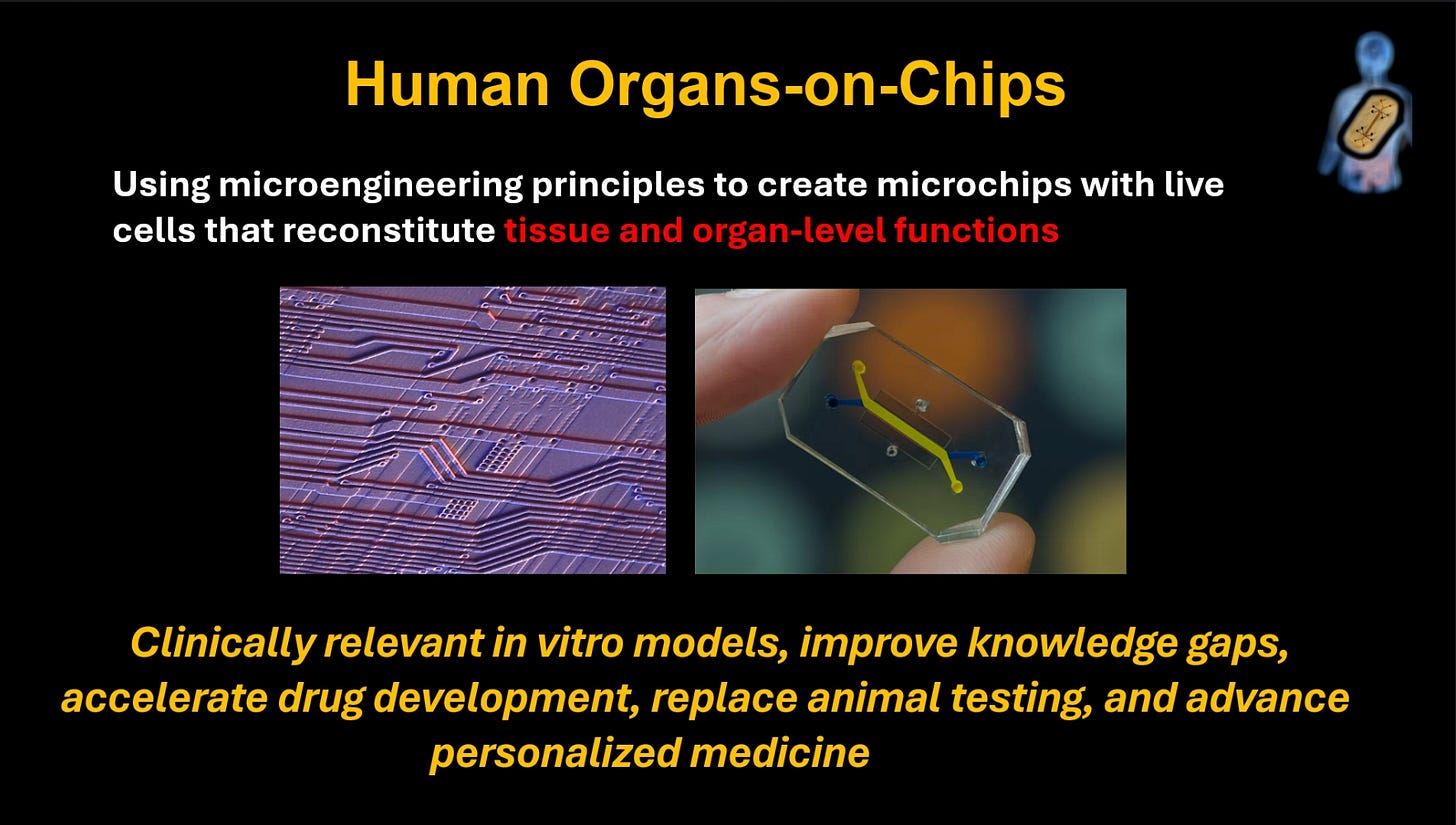
Outside of a really great Dr. Amy B. Killen on women’s sexual health, on “Achieving Sexponential,” (something of which I knew virtually nothing about), I also really liked this presentation on “Advancing Women’s Reproductive Health with Human Organ Chips” by Boston Children’s Hospital, Dr. Zohreh Izadifar (see on LinkedIn). The above video from Dr. Izadifar shows how 3D printing is being used to help with critical foundational research in women’s health, things we need to understand in order to advance the field of fertility research. Dr. Izadifar talked about how their work seeks to simulate “human tissues in the lab to replace mouse models.” Little did I know that female mice lack menstruation cycles, making this more difficult for women’s health research. The video above shows the chip which is “their device made of plastic, inside of that there are 3 microchannels, middle channel, separated by membrane, you can see different types of cells (ex. lung cells), on either side of channel, you see vacuums, stretching membrane, to simulate movements of intestine, move flow and air in different channels. With these factors you can study complex conditions like infection (ex. like a lung) and you can see the blood cells and study how the cells are responding. This simulation was done in these chips. So you can see the healthy lung chip, an introduction of bacteria in the channel and how our body would theoretically respond. You can view how the blood cells would pass through, when you stain the white blood cells (green is the bacteria). The idea is to engineer 3D cellular structure and tissue-to-tissue interfaces, where you can recreate mechanical cues (dynamic flow, cyclic breathing) and mimic human tissue in a way we haven’t before. This technology started in 2006, and has evolved much over time.” She continued how critical this type of technology can be used to model other serious female reproductive conditions.
“We can use organ chips for female reproductive health, here we can leverage organ-on-chip technology for modeling female reproductive conditions such as Bacterial Vaginosis (BV), which a happens in female reproductive track, which has a high prevalence which causes pre-term birth, abortion, high risk of acquiring HIV, and STDs, pelvic inflammatory disease, and a high failure rate, and is not treatable, and is expensive to treat.”
1b/ AthenaDAO and Fertility Resources - Things I wish I knew when seeking to freeze my eggs (easy version)
I signed up for the Fertility Pregnancy Institute with Dr. Cleopatra, the first African American tenured professor at USC, tried some of her supplements, her MOOC is also amazingly jam-packed with more information to regulate my nervous system, understand my own psychology, biology, and overall health—not only what to do about my fertility. This was a really empowering thing - one of the best investments I have ever made.
I also signed up for AthenaDAO’s Fertility MOOC which also was rich with information that laid out a lot (like Dr. Cleopatra’s content), but in slide format, and they had a huge emphasis on cutting-edge technology improving fertility outcomes and advancing the whole field wof omen’s health, an area that is massively overlooked and possesses a huge opportunity. My favorite lecture was the one about utilizing AI (computer vision algorithms) to enhance egg retrieval and improve fertility outcomes (more on this on my previous Substack can be found here).
Below I list a link of resources I compiled over the last year that have helped me as I did my fertility consultation’s with Spring Fertility in Silicon Valley last year.
Natera - Genetic Testing - I got my tests done through Spring Fertility that uses their testing services.
Concierge IVF - If you don’t want to inject yourself, you can pay someone to do it.
Predictabill - Find out what companies cover fertility, unfortunately not everyone does.
Spring Fertility Egg Calculator - Spring Fertility is based in Silicon Valley. You can use this calculator when thinking about planning more than 1 kid, you can calculate how many eggs/embryos you want to retrieve/extract from your body to freeze.
Fertility IQ - more general information on fertility.
2/ Women in Tech Resources
Because I get so many frequent requests to mentor and guide women and femmes, who are students, transitioning non-traditional professionals in tech, Stanford and UC Berkeley alumni, and a lot of other college students, and early stage founders, I am often oversubscribed to the point where I have had to turn down all requests unless someone is interning or working for me on a project to develop their skills, or offering a really promising startup in exchange for sweat equity until I have more of a capacity to write a check (I’m often juggling multiple projects so it has been tough). So below, I provide my resource guide primarily focused on software engineers and some advice that can help all junior women out when considering how to level up.
I created this Women in Tech Resource Guide, which I originally gifted to the Women in Tech community at Taro (YC S22), a software engineering professionals group focused on career growth. Check it out here so at least you can learn and join other industry networks, support groups by category and role.
Additionally, I originally wrote a post in 2021 about women in tech (now defunct), so I’ll briefly summarize it here. For some people, they say “Make. Show. Learn.” “Dream, Create, Explore” and “Play. Create. Connect.” and most memorably for me recently Apple’s latest motto for Apple Vision for is “See. Feel. Do.” which emphasizes the senses. For me, it’s 3 things “Learn. Build. Network.” This helps encourage women in tech to get their foot in the door.
Learn - Always be learning. In tech, your tech stack (tools, frameworks that you use) is constantly evolving. Today’s AI model will be tomorrow’s ‘old news’ in a few days weeks. The beauty of technology is that it is always growing and changing. When you learn some base fundamentals, you can step in and learn anything even when there have been many updates, and you’ll be impressed with how much the space can take a new shape and form.
Build - Build a portfolio of projects, try hackathons, take MOOCs.
Network - Expand, join, and cultivate strong networks of support.
For all the women non-software engineers/data scientists/technical folks/scientists - the same principles apply, and I would also recommend the same advice as above along with these 3 other actions that might help you advance your career:
1. Negotiate (for more money/title/role/resources etc.).
2. Self-Advocate (and find your sponsors and mentors).
3. Self-Promote (Build Your Brand - and independent of a company you work for).
Negotiate for More $$$ Money. Women often are unpaid a drastic amount less when compared to men (this is known) when it comes to salaries, business deals in almost every industry. I recently learned Gillian Anderson (known as the actress who plays Dana Scully in one of my favorite old 90s TV-series, The X-Files) still got paid less than her cis straight white male co-star and counterpart, David Duchovny in the most recent version of the X-Files, not to mention the same thing happened to Scarlet Johannson in the Marvel franchise compared to her cis straight white male co-stars in the Marvel universe. Source: Substack The first folks to pay me a significant amount was from the Black community, Black technical women, but also had Filipina American women who paid me also prior to speak. Shout-out to my homie, Nadia de Ala who helps coach women to be more successful in negotiation. I shared this advice to women earlier this year with women software engineers from the South (in Texas) on a Slack channel who claimed that they never broke the salary of $200K as staff engineers and couldn’t believe what I shared. The South, obviously a different market than Silicon Valley, shows you how vast the pay gap is (women in Silicon Valley can also make that much at a FAANGMULA company after 8 years of experience, and if they’re not, then there’s a disparity for sure). Source: Substack Ethnicity vs. Earnings ratio compared with white, non-Hispanic men. Pacific Islander folks make a lot less compared to other Asian American ethnicities. And for those that think “all Asian Americans” make hella money (perpetuating the model minority myth) are the same and “all you Asian girls look alike,” we beg to differ, check out the pay equity pay gap among our group, with disaggregated data courtesy of reproductive rights advocacy and women’s rights group, NAPAWF - National Asian Pacific American Women’s Forum graphic below. See and read the full report here. This is how much less we make compared to cis straight white folks.
Self-Advocate and find sponsors and mentors (you also must know the difference between the two), and yes this includes male allies. Read this great book on mentorship, Beyond the Myths and Magic of Mentoring: How to Facilitate an Effective Mentoring Process by Margo Murray here. The higher you move up, you will need sponsors, and it can be more challenging to have more senior women in your field or industry or role helping because they are busy also doing all the things (meaning raising families and companies simultaneously making their time limited), so leverage male mentorship too. Everyone I’ve effectively mentored (good mentees that actually actively listen, the majority of which are women of color btw), all were hired into tech companies (FAANGMULA) and stayed retained. Everyone who didn’t listen, struggled in their career for years.
Self-Promote. (Self promotion, like self-care, isn’t self-centered or selfish, it’s a means to help you do more than survive and to thrive) - Build your personal brand outside of your company. One of the folks I saw leverage this best was my friend Aishawarya Srinivasan (formerly of Microsoft, now at Fireworks.ai), who has done an amazing job as a content creator to be able to create something distinct from her role at her company so that when she left Microsoft, she still had quite a following at 533K followers on LinkedIn. It’s important not only to have your own professional brand, but also one independent of your <insert x y z role> at <x y z company> here. Check out her book, What’s Your Worth: Discovering Your Personal Brand here. I doubt that some of you may work the same company for the rest of your life. In Silicon Valley, we tend to get overly attached to our identities at any one single place of work, many friends after being laid off at Meta/Facebook/Oculus over the course of the pandemic (after spending 5+ years there) told me what identity crisis they faced for a year and struggled to find work comparable to their last role. Some of this was an over-reliance on a company name and only focusing probably on one really niche thing (and probably not being technical enough at a company that has a reputation of gutting anything that wasn’t core tech). Regardless of being technical or non-technical, what I found common among friends who thrived (even choosing to leave Meta/Facebook/Oculus) instead of getting re-org’ed again, was that they had a strong enough personal brand (and even one outside of content creation). They were able to leverage their position by the previous company they worked for to secure something else substantial, even if it meant fractional consulting and contracting or something else.
3/ Design Books and Other Recommended Reads
As promised there are a couple my recommended reads before diving into the DeepSeek details.
If you check out the Almanmack of Naval Ravikant,by Eric Jorgenson, Jack Butcher (foreword by Tim Ferris), founder of Angelist (the startup platform), it’s great, and even a collection of his tweet storms is valuable, the one on how to get rich is one of his most popular).
Me with Kevin Owocki (founder of GitCoin and author of How to DAO) at the book launch at Edge and Node SF in the Presidio.
Web3 Books - Some of which I’m still finishing
How to DAO: Mastering the Future of Internet Coordination by Kevin Owocki. Shout-outs to Kevin. I’m a proud GitCoin Kernel Block IV alumnus. He’s done a great job in decentralizing GitCoin itself and providing an organizing philosophy for the broader Decentralized Finance (DeFi) movement. Personally as a friend of other moms homeschooling their kids who want to start a DAO, this book provide more non-technical friendly language with its attention to simplifying a lot of the complexities that plagued much of the crypto/blockchain/web3 space for years, making it much more accessible with approachable language in how to actually think about DAOs.